
What is a Synthetic Wig? Cost, Lifespan and Facts
What is a synthetic wig? Before spending your money, you need to know what these units are made of and how they act compared to real hair. A synthetic piece isn’t a long-term investment, but it saves you time in the morning. To help you choose, Royal Hair will clear up what a synthetic wig actually is, its real pros, and its hidden flaws. You will also get the exact steps to handle and wash your unit without ruining it.
What is a synthetic wig?

A synthetic wig is simply a machine-made cap topped with man-made fibers. Manufacturers use chemical polymers like acrylic, polyester, or PVC, heating them up and pulling them into fine strands that look like hair.
The biggest trait of these plastic fibers is something called “style memory.” Once the factory bakes a specific texture into the wig—whether it is bone straight, bouncy waves, or tight curls—it stays that way. Rain, washing, or stuffing it into a drawer won’t change the shape.
Synthetic vs. Human Hair Wigs
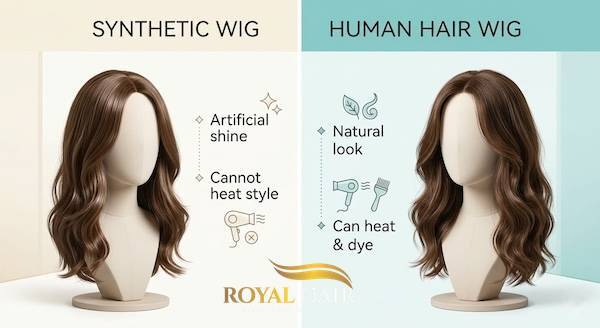
The real difference comes down to your budget and your time.
Human hair wigs use real human hair. They look completely natural, take hair dye easily, and handle hot flat irons without a problem. They last for over a year, but they cost a lot of money and react to bad weather.
If you are looking for this level of quality, Royal Hair offers a wide selection of premium human hair units. These pieces are crafted from high-grade, virgin hair or remy hair that retains its natural shine, softness, and strength, giving you the most realistic look possible.
Synthetic wigs are cheap and ready to wear right out of the box. You don’t have to style them. The catch? You can’t change their color, they wear out fast, and touching them with a standard curling iron will melt them instantly.
Why Choose a Synthetic Wig?
Low Cost
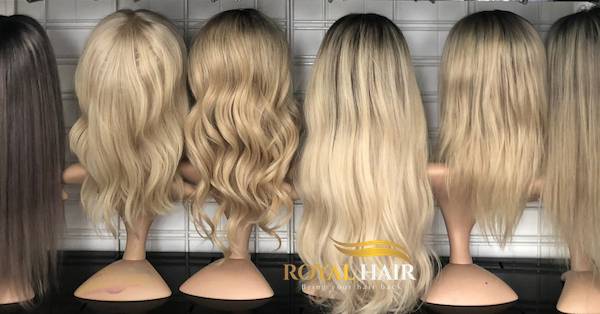
Cost is the biggest win here. Synthetic units cost a mere fraction of what you would spend on a human hair piece. If you are just testing out alternative hair, or want to try a blunt bob or a bold color before committing serious money, this is the safest route.
No Styling Needed
Synthetic fibers feature something called “style memory,” meaning the factory texture is permanent. Whether the wig is bone-straight or packed with tight curls, it stays that way. Wash it, let it air dry, or cram it into a travel bag—the hair snaps right back into its original shape without any tools.
Great for Bad Weather
Real hair is a nightmare in the humidity; it either fusses up or goes completely limp in the rain. Synthetic strands are plastic, so they do not care about the weather. Rain, heavy fog, or summer sweat will not alter your look.
Ready to Wear Fast
These pieces are built for frantic mornings. There is no prep work, no plucking the hairline, and no styling required. You can literally cut the tags off, give the cap a good shake to loosen up the fibers, throw it on, and head out the door.
Looks More Natural Now
Forget those stiff, shiny Halloween wigs from back in the day. High-tier brands now use premium monofilament or Kanekalon blends. These materials mimic the light absorption of real hair, move naturally when you walk, and feel surprisingly soft.
The Problems with Synthetic Wig
Cannot Use Heat
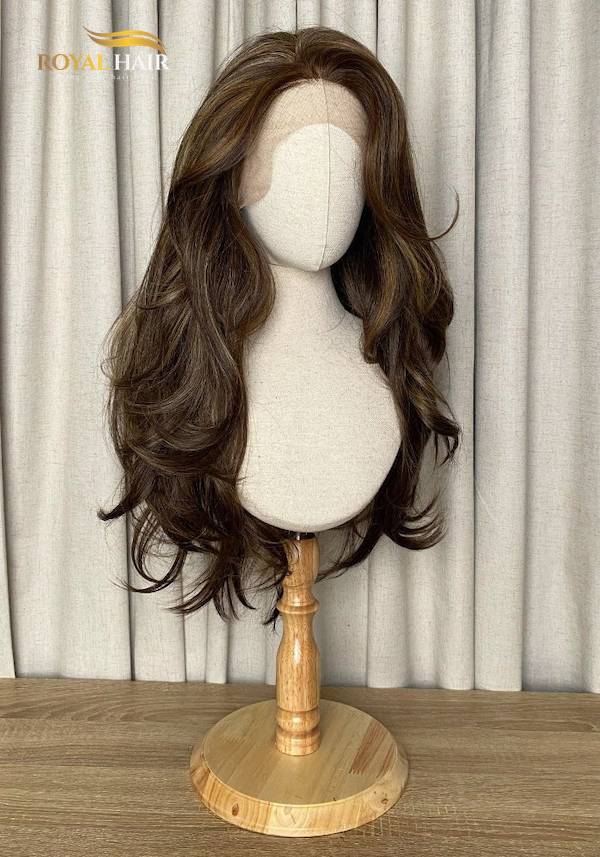
You are stuck with one look from day one. Unless your unit explicitly says “heat-resistant,” keep your everyday flat irons and curling wands far away. One wrong pass with a hot tool will instantly melt the plastic strands into a fried, gooey mess.
Fake Plastic Shine
Cheaper synthetic hair has a dead giveaway when you step into direct sunlight or take a photo with flash. The acrylic or nylon base reflects light in a glassy, artificial way that screams “fake hair.”
Cannot Change the Color
Do not attempt a DIY dye job at home. Standard box dyes and salon bleaches require a porous cuticle to sink into. Since plastic is completely non-porous, the pigment will slide right off the strands and likely stain the fabric cap underneath.
Tangles and Knots Quickly
Synthetic hair degrades fast from simple daily movement. Rubbing against your jacket collar, cotton hoodies, or even your shoulders creates static. Within a few weeks, the strands at the back of your neck will tangle, frizz, and mat into a rough clump.
Feels Hot and Sweaty
Plastic does not breathe. Because these fibers are naturally denser than human hair, a synthetic cap acts like a blanket on your head. It blocks airflow, leaving your scalp feeling hot, itchy, and sweaty during the summer.
Stuck with One Hair Part
Most budget-friendly synthetic caps feature fixed, machine-stitched parts. Unlike human hair where you can flip your parting from the left to the right side on a whim, moving the part here will just expose the ugly tracks underneath.
Needs Special Shampoo
You cannot wash these with your regular drugstore shampoo. Normal hair care ingredients strip the synthetic coating right off, turning the wig into a stiff, straw-like block after two or three washes. You have to buy specialized, synthetic-safe cleansers.
How long does a synthetic wig last for?
Expect a daily-wear synthetic wig to last about 1 to 3 months. If you rotate between multiple units and take good care of it, you might get 4 to 6 months out of it.
Since the hair is plastic, it naturally wears down from rubbing against your shoulders and gathering sweat. Once the ends get rough, frizzy, and matted, the wig is done. You can’t fix it; you just have to buy a new one.
Best Synthetic Wigs Types

If you want to buy synthetic but still want to look natural, steer clear of basic party wigs. Look for these three builds:
Synthetic Lace Front Wigs
These have a patch of sheer lace at the forehead. Workers knot the synthetic strands into the mesh by hand, giving you a natural hairline so you can wear your hair away from your face.
Heat-Resistant Synthetic Wigs
These use upgraded fibers (like Futura) that can take heat up to $180^\circ\text{C}$ ($350^\circ\text{F}$). You can safely straighten or curl them, though the styling takes longer to lock in than real hair.
Monofilament Synthetic Wigs
The top cap uses a soft, clear mesh that lets your skin show through. It makes the hair parting look like a real scalp and feels much lighter on your head.
How to Care for Synthetic Wigs
Standard hair products will ruin plastic fibers. You have to treat them differently:
- Use cold water only: Hot water melts the style memory and ruins the shape forever.
- Buy synthetic shampoo: Regular shampoo is too harsh. Soak the wig in cold water with a splash of synthetic-safe soap for 10 minutes. Don’t scrub it.
- Air dry on a stand: Hang it on a wire stand to dry. Never brush the hair while it is wet, or you will stretch and warp the fibers.
- Stop the friction: Use a light synthetic leave-in spray daily to cut down on static and knots.
Frequently Asked Questions
What materials go into a synthetic wig?
Synthetic hair is made from man-made polymers. Manufacturers take plastics like acrylic, polyester, or PVC, heat them up, and spin them into fine, thread-like strands that look like real hair.
What are wigs usually made from?
Most wigs on the market come down to two choices: real human hair or man-made synthetic fibers. Human hair pieces come from real donors, while synthetic ones are built completely out of processed chemical plastics.
Is synthetic hair actually plastic?
Yes, it is entirely plastic. Because these fibers are made from chemical polymers, they do not behave like natural hair. This plastic base is the exact reason why they hold a permanent style, but also why they melt under heat.
How do you spot a synthetic wig?
The easiest giveaway is the shine and the smell. Cheap synthetic units have a glossy, glass-like glare under natural sunlight. You can also do a burn test with a single loose strand: synthetic hair will melt quickly into a hard plastic bead and smell like burning chemicals, while human hair turns to ash and smells like burnt feathers.
Why do people prefer synthetic hair over real hair?
The main reasons are price and time. Synthetic wigs cost much less than human hair pieces, making them easy on your wallet. Plus, they require zero styling effort—you just shake them out, put them on, and go.
Can you blow dry a synthetic wig?
No, you should avoid standard hair dryers. The hot air will frizz or melt the plastic fibers immediately. It is always safest to let the wig air dry naturally on a stand. If your unit is labeled heat-resistant, you can use a blow dryer, but only on the coolest setting.
Can I dye a synthetic wig at home?
No, regular hair dyes and bleaches from the store will not work. Plastic is non-porous, so the color cannot sink into the strands. It will just wash right off or stain the cap mesh. While some people use acrylic ink mixed with rubbing alcohol to tint them, it is a messy process that often ruins the hair.
Conclusion
Knowing what is a synthetic wig and understanding how its fibers behave helps you make a much smarter buying choice. If you just need a low-cost, ready-to-wear look for a quick style change, it is a highly convenient option. However, if you are tired of plastic strands that tangle quickly and want something that lasts, stepping up to a premium human hair unit is worth every penny. Head over to Royal Hair today to explore our durable, natural-looking collections that fit your lifestyle perfectly.
